
A sample helps confirm that a supplier has understood the request, but it does not guarantee that every item in a future batch will be identical. To make the sample useful as a reference, decide in advance which product and packaging features you will accept.
Agree on requirements before the sample is sent
Confirm the model, material, dimensions, colour, included parts, markings and intended use. If a product has several versions, identify the exact one you need. Ask whether the sample is a standard production item or a hand-finished prototype that may differ from mass production.
Check the sample against your use case
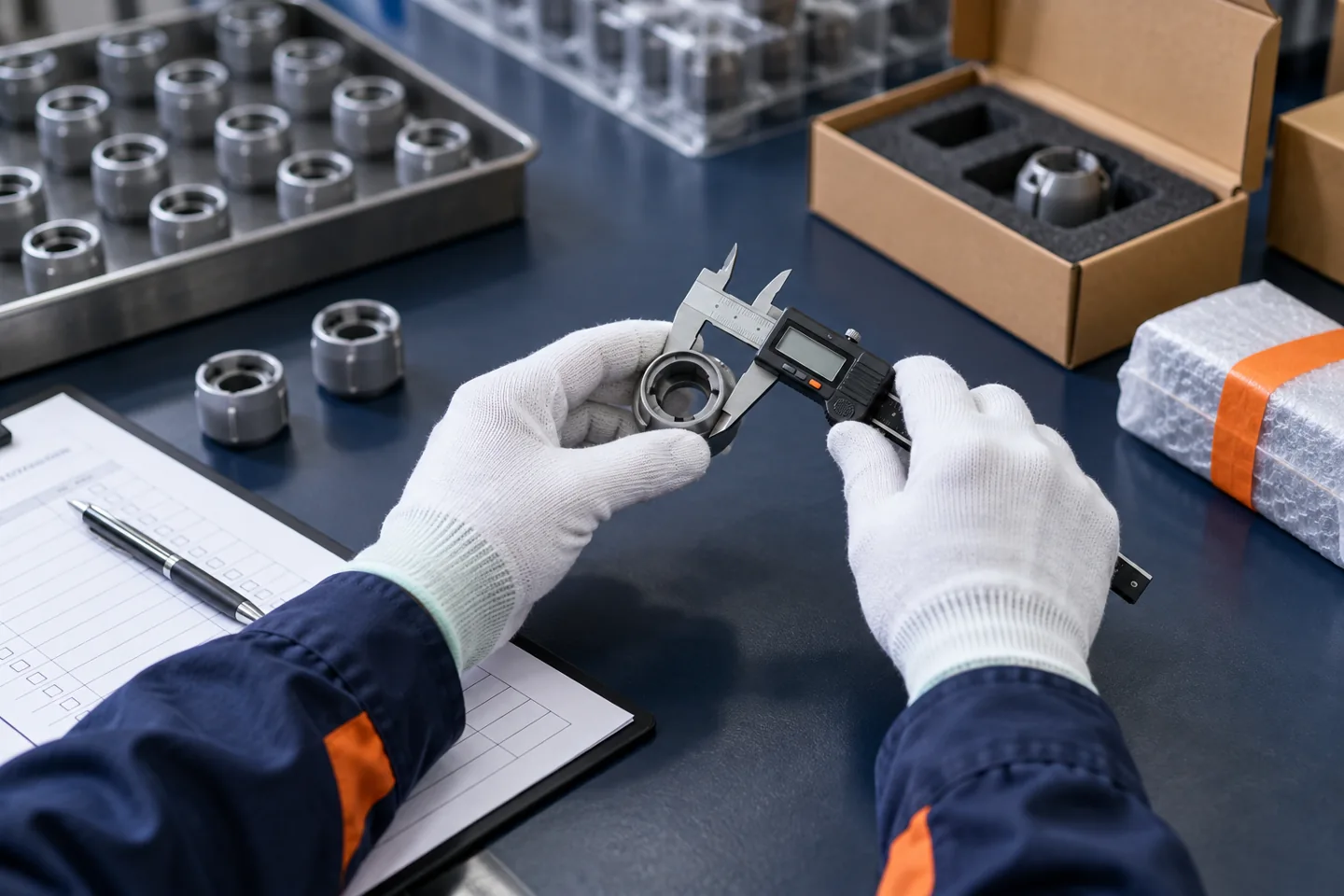
Look at assembly, surface finish, seams and details; measure important dimensions; and test operation and compatibility where relevant. Check accessories, instructions, labels and protective packaging. Take photos and note specific issues rather than relying on a general impression.
Record the approved reference
If changes are needed, list them in writing and ask the factory to confirm that they can be repeated in the batch. Keep photos of the approved sample, the specification and the packaging version. For important changes, request a revised sample or written confirmation before paying for production.
Confirm cost and timing
Ask for the sample price, preparation time and domestic delivery cost within China. Confirm whether any of those costs are credited against an order. Record the MOQ and batch lead time separately: a finished sample does not mean production has started.
Before the batch ships
- Compare the first finished unit or agreed reference with the approved specification.
- Check quantity, key features and packaging using an agreed sample or inspection plan.
- Agree what happens if a deviation is found before dispatch.
- Request photos or an inspection report if you are not in China.
A sample reduces uncertainty; it does not replace checking the batch. TEAM A→Z can coordinate seller communication, receiving a sample in China and product checks before international dispatch.