
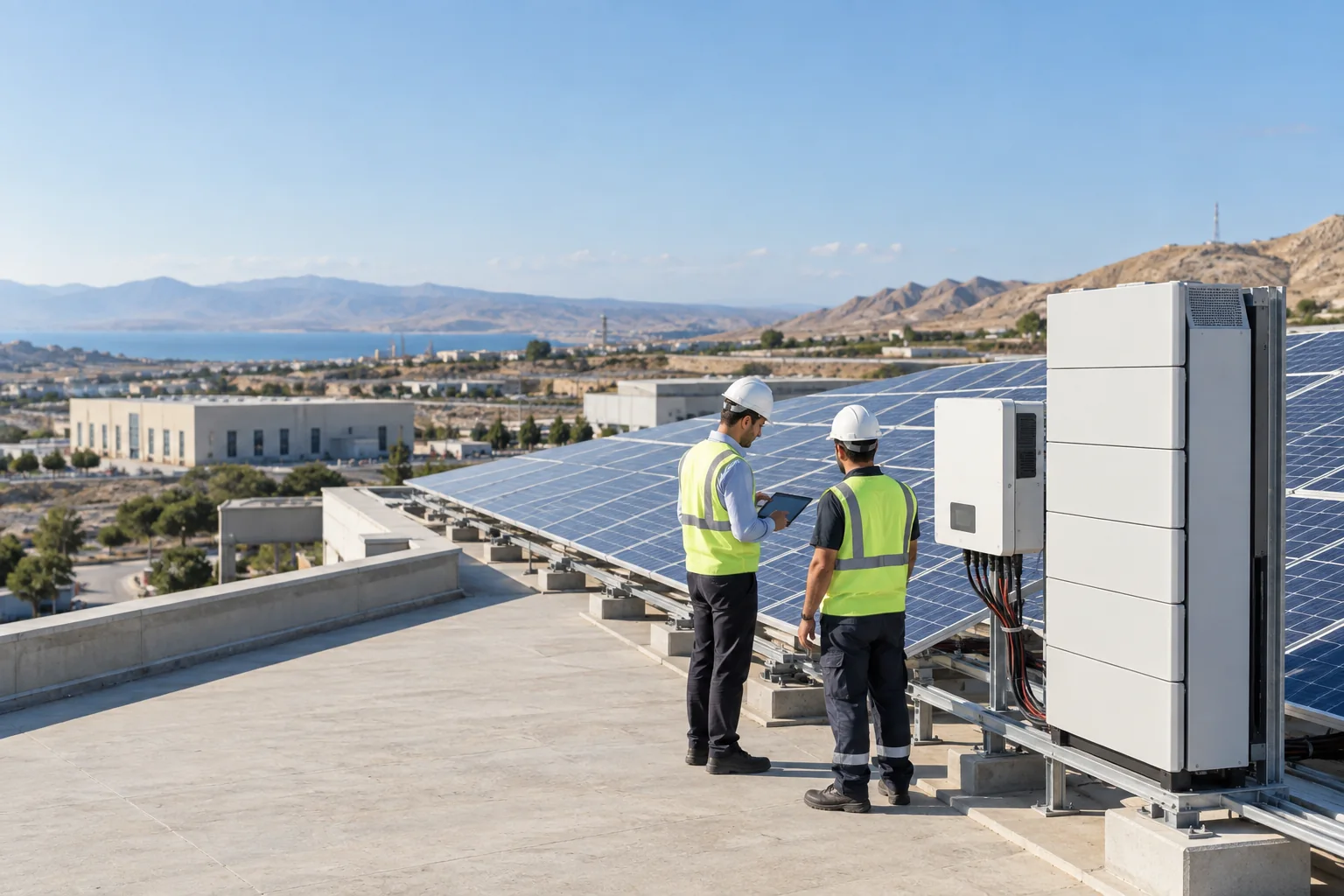
Treat a solar system as a project, not a product list
When sourcing commercial solar panels and inverters, panel wattage and catalogue price are only a starting point. The design depends on usable roof area, orientation, shading, the facility’s load profile, grid connection and backup requirements. Battery storage can significantly change both the system design and landed cost.
You can begin comparing solar panels, solar inverters and battery energy storage systems in the TEAM A→Z catalogue. Treat listings as sourcing leads, not an engineered design; have a qualified professional verify the final system.
What to include in your supplier brief
- Facility type and location; usable roof area, surface, orientation and shading.
- Electricity bills for the last 12 months and, if available, an hourly load profile.
- Objective: daytime generation, grid-parallel operation, backup power or hybrid use.
- Grid parameters, phase, voltage, frequency and connection constraints.
- Target annual output, required battery autonomy and any expansion plan.
Ask for the exact panel model, rated output and temperature coefficient; inverter input range and phase configuration; and battery usable capacity, cycle specification and control protocol.
How to compare supplier offers
**System compatibility.** Request written confirmation that the specified panel, inverter and battery models work together. A shared brand name does not prove compatibility across different generations.
**Documentation and warranty.** Request test and conformity documents for the exact model, serial-number traceability and the warranty claim process. Clarify how service works in Azerbaijan and who pays return freight.
**Packaging and freight.** Confirm pallet dimensions, gross weight, protection against breakage, cargo insurance and the carrier’s requirements for batteries. Battery transport rules must be checked with the actual carrier before dispatch.
**Landed cost.** Compare equipment, export packaging, China-side delivery, export paperwork and international freight separately. A low panel price can be offset by packaging, storage or shipping.
Commercial solar pre-order checklist
1. A project engineer has the load profile and roof/site information.
2. Compatibility of the selected models is confirmed in writing.
3. Documents, warranty and service terms match the selected configuration.
4. Packaging, pallets, battery transport and insurance are agreed.
5. Local import and grid-connection requirements have been checked.
### How do I choose an inverter for commercial solar panels?
Check the system voltage, phase, input range, string design, grid mode and battery compatibility against the project. Rated kW alone is not enough to confirm fit.
### Does a business solar installation always need batteries?
No. Storage is useful when backup power or shifting energy use is part of the objective. Define critical loads and required autonomy before requesting a battery quote.
### What is easy to overlook when shipping solar equipment?
Panel breakage protection, pallet dimensions, cargo insurance and carrier rules for batteries. Agree these details before the cargo leaves the supplier.
**Send the facility parameters and equipment list.** TEAM A→Z can help collect supplier offers and coordinate sourcing and logistics: discuss your project.